Did St Hilarion Inspire Disney? The Real Story Behind Cyprus’s Fairy-Tale Castle
Key takeaways
- The Disney link is a local legend, not a verified Disney fact.
- St Hilarion guarded the mountain route between Kyrenia and Nicosia.
- In 1229, the young King Henry I became central to a siege at the castle.
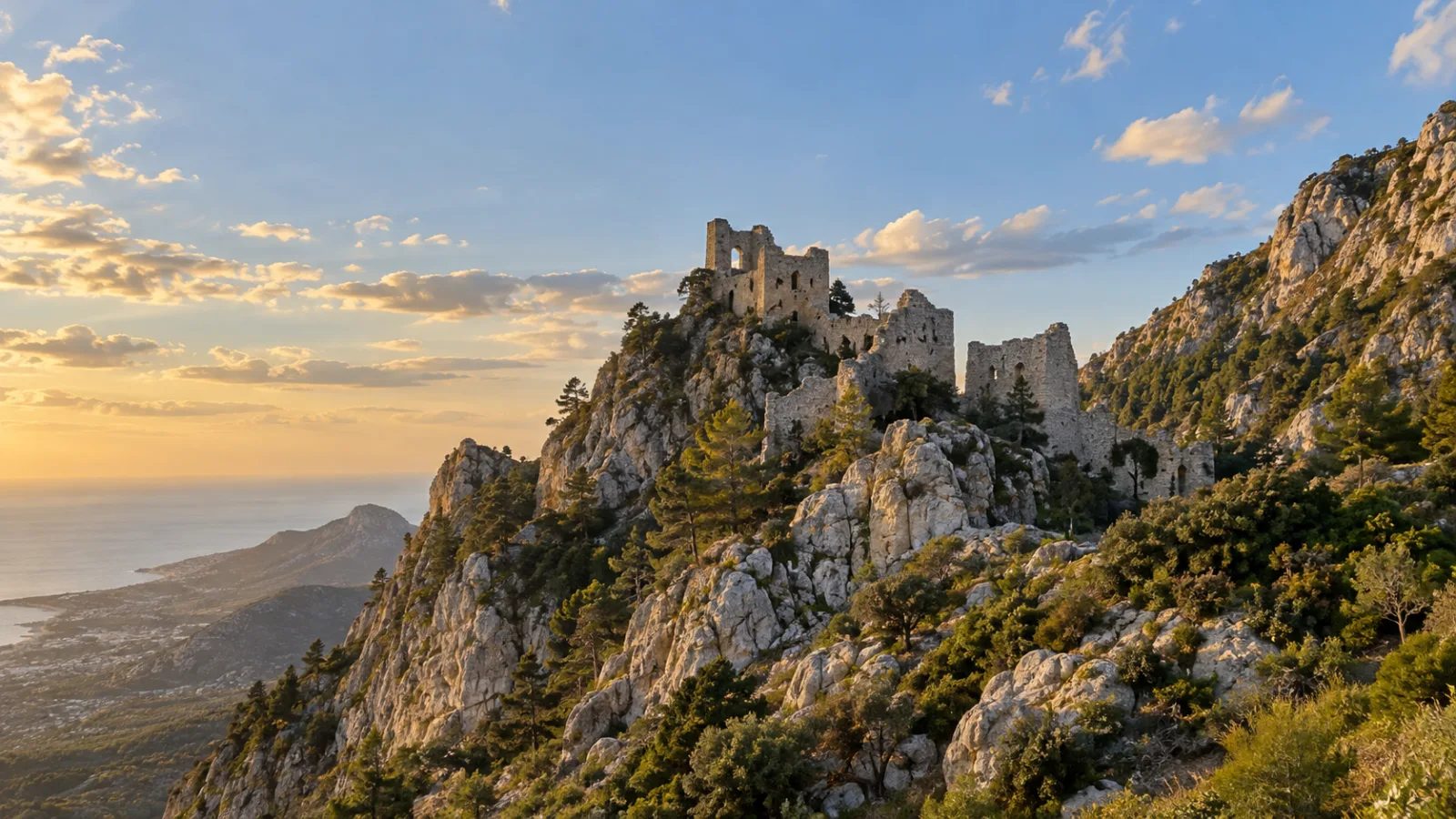
When you look up from Kyrenia towards the mountains, St Hilarion does not first resemble a history lesson. It looks like a fairy tale caught in stone: walls climbing the crag, rooms hidden in the ridge, and a silhouette that seems too theatrical to be entirely real. That is why one story has travelled for years: Disney must have taken inspiration from this castle.
The castle beneath the Disney rumour
The details tend to shift. Some versions mention Snow White; others point to Sleeping Beauty. Local visitor material presents the connection as a reputation rather than a proven fact. Disney’s own material identifies Bavaria’s Neuschwanstein Castle and Europe’s soaring castles as inspirations for Disneyland’s Sleeping Beauty Castle. There is no primary Disney source confirming St Hilarion as a direct model.
That does not make the castle any less compelling. In fact, the documented story of St Hilarion is more dramatic than the rumour. It is a story of watchmen, bread ovens, a child king and a mountain fortress that briefly held Cyprus’s political future inside its walls.
Once called the Castle of the God of Love
The twin peaks above the castle were known in the Middle Ages as Didymos. Under the Lusignans, the name became Dieu d’Amour—the Castle of the God of Love. The name sounds romantic, but this was a place built for vigilance rather than daydreaming.
Developed in the late 11th century under Byzantine rule, St Hilarion formed a mountain defence line with Buffavento and Kantara. Its position allowed people to watch the northern coast and the strategic route between Kyrenia and Nicosia. Below lay the harbour; above, the mountain pass; between them were guards, soldiers and the systems that made a long stay on the ridge possible.
The castle was more than a collection of towers. Research into medieval descriptions records mills, ovens and houses within its enclosure. St Hilarion could support a small mountain community during a siege. That detail brings the place closer: bread being prepared, rainwater being guarded, men watching the pass, and families living close to a dangerous frontier.
1229: when a young king waited in the mountains
The castle’s most overlooked story unfolded in 1229, during a struggle over who would govern Cyprus. After Holy Roman Emperor Frederick II left the island, his appointed bailiffs held power in the name of the young King Henry I. When John of Ibelin’s forces defeated them near Nicosia, the imperial party withdrew to St Hilarion with the underage king in their custody.
For a time, the future of Cyprus rested high above Kyrenia. St Hilarion was besieged. The conflict began in 1229 and the castle’s surrender extended into 1230. King Henry was ultimately handed to the Ibelins. The walls were not simply shelter from attack; they became part of a political contest focused on a child who was old enough to be king, but not old enough to decide his own fate.
Near the viewpoints now photographed by visitors, people once waited for news and calculated who would govern the island. That is the quiet force of St Hilarion: behind the extraordinary view were real lives marked by uncertainty, labour and fear.
What the fairy tale owes to history
We cannot state as fact that St Hilarion inspired Disney. Yet it is easy to understand why the legend endures. Its three levels, sheer rocks, winding paths and views across the Kyrenia plain have the visual language of a storybook castle.
Its real power lies elsewhere. This was a monastery-linked mountain site, a Byzantine lookout, a Lusignan refuge and a stage for political conflict. Even after the Venetians dismantled much of the mountain fortress system in the 15th century to prevent enemies from taking it, St Hilarion refused to become silent.
So it is worth resisting the easy answer. The castle does not need a borrowed fairy tale to matter. Its own history already has suspense, power, hardship and the kind of half-heard memory that remains in a place long after its walls have fallen quiet.
Sources and editorial note
The Disney connection is treated here as a local legend, not as a confirmed Disney statement. The historical sections draw on the following sources:
Frequently asked questions
Did St Hilarion Castle really inspire Disney?
No primary Disney source confirms this. The association is a local legend shaped by the castle’s fairy-tale appearance. Disney identifies Neuschwanstein Castle and European castles as inspiration for Disneyland’s Sleeping Beauty Castle.
Why was St Hilarion strategically important?
The castle stands high above the route between Kyrenia and Nicosia and overlooks the northern coast. Together with Buffavento and Kantara, it formed part of a Byzantine mountain defence line.
What happened at St Hilarion in 1229?
After a clash near Nicosia, imperial bailiffs withdrew to St Hilarion with the young King Henry I. The castle was besieged; the conflict began in 1229 and the surrender extended into 1230.
Related articles
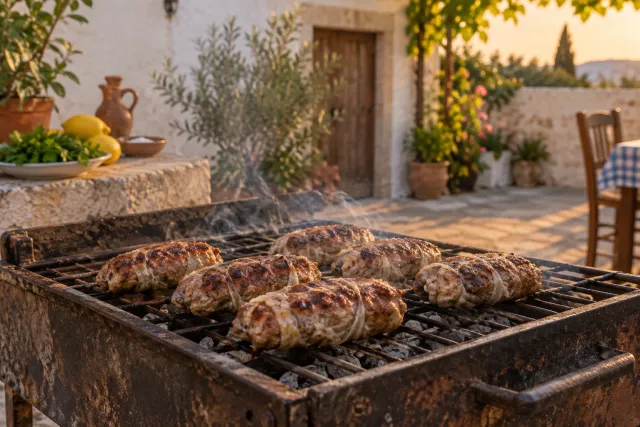
Why Is Şeftali Kebabı Not Made with Peaches? A Cyprus Grill Story
Şeftali kebabı has no peach fruit—only a memorable name, caul fat and the patient rhythm of a charcoal grill.
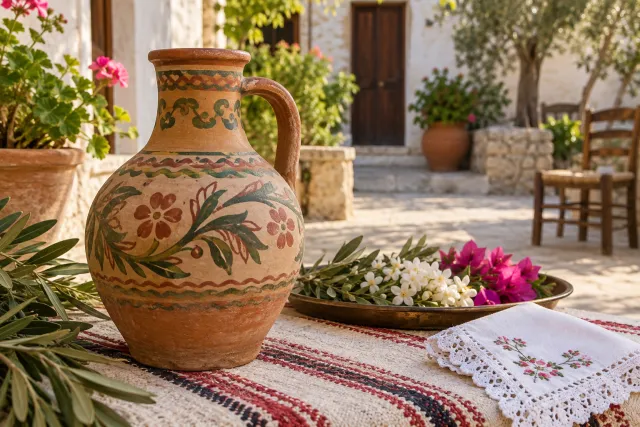
Testi Oynatma in Turkish Cypriot Weddings: A Quiet Ritual Story
A traditional wedding ritual where play, abundance and community meet.
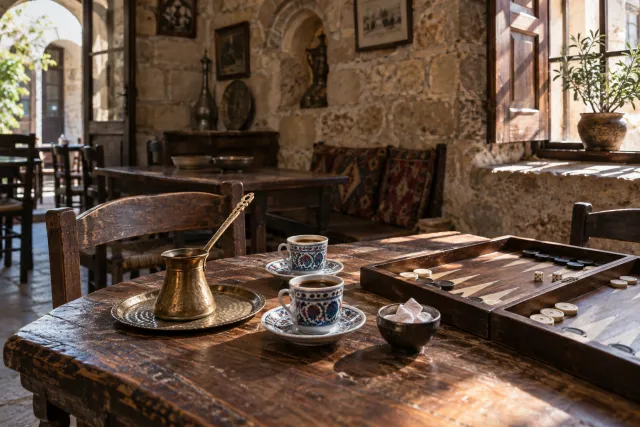
Old Nicosia Coffeehouses: Where a City Gathered Around a Cup
A small coffeehouse could hold a city’s news, arguments and long silences.